Newel and Sash : sash window and staircase restoration in Bath
Painted shut, rattling, propped up with a book? We mend the sash windows and staircases Bath's houses were built with, so they slide, seal and stay where you leave them. Never ripped out.
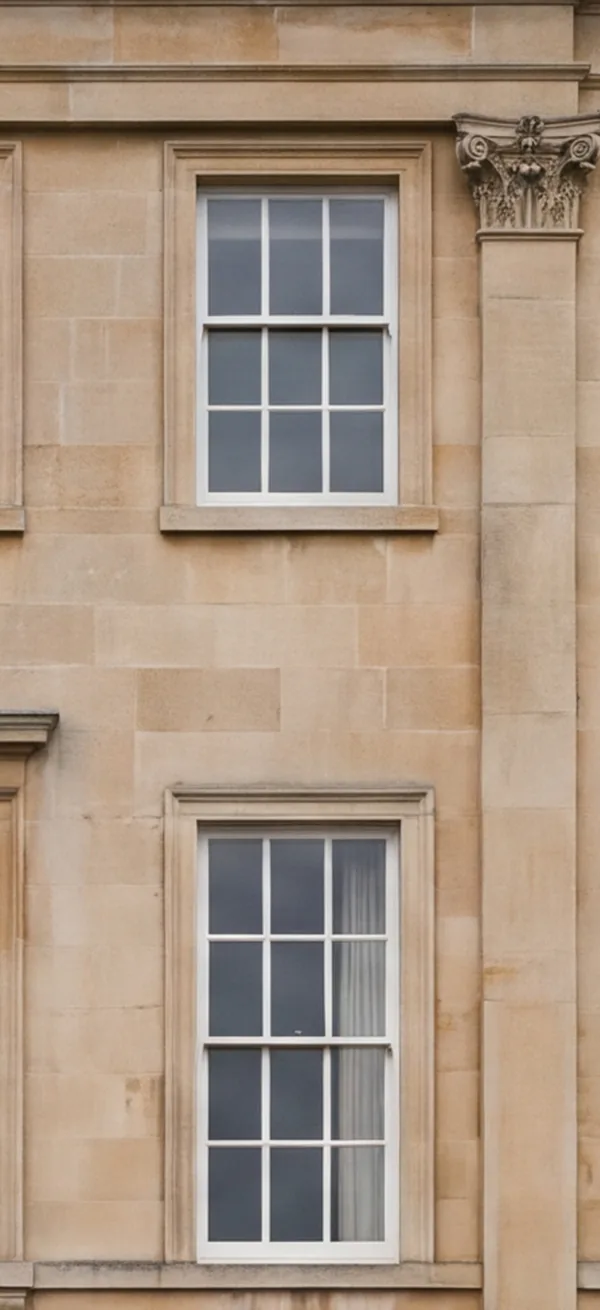
Before[01]
What is holding it together.
An example window in its twentieth winter of quick fixes. Each one is somebody’s answer to a worry.
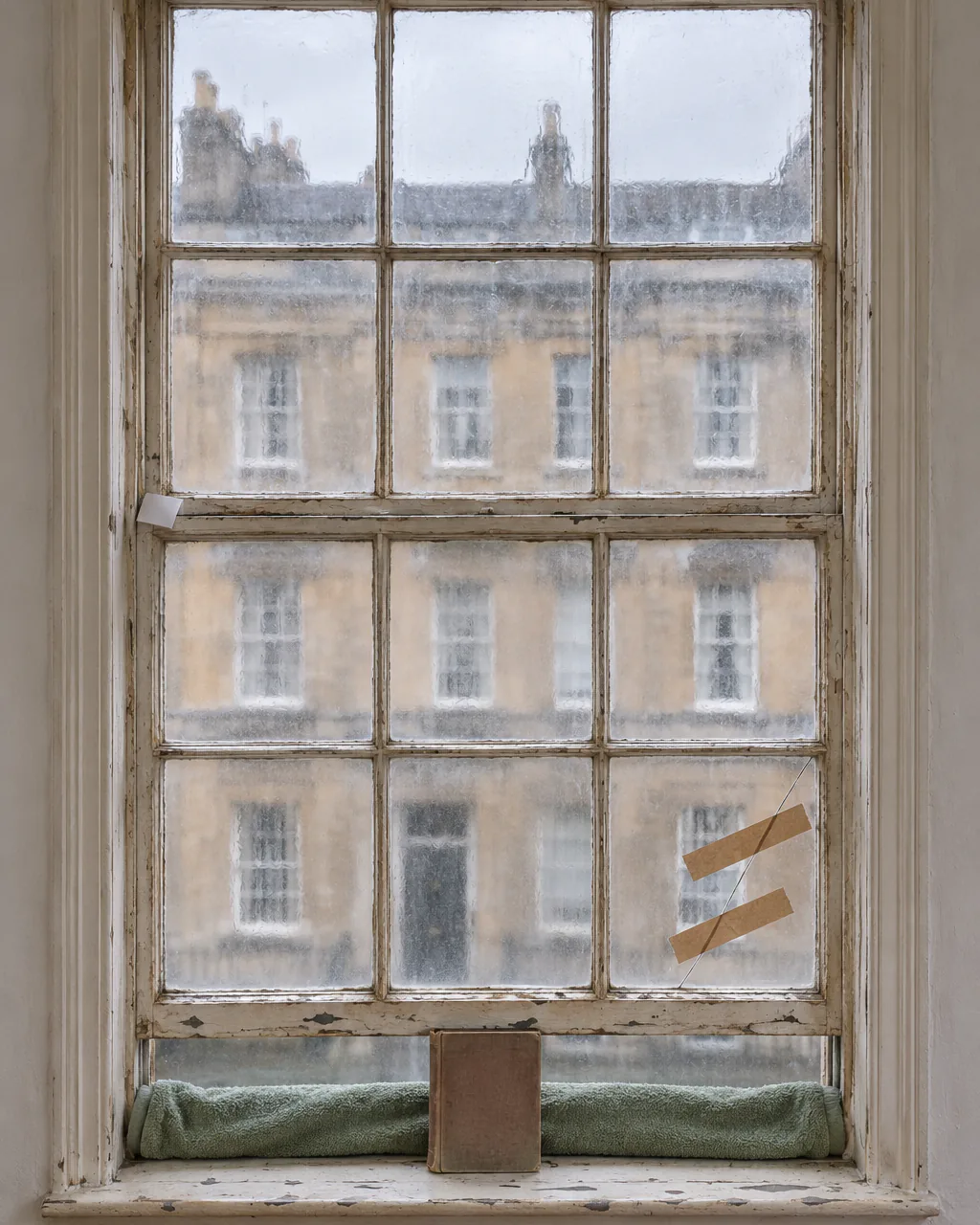
| The fix | Since | The worry, in the owner’s words |
|---|---|---|
| A folded card between the meeting rails, a towel along the sill | Every October | “Half the sashes are painted shut and the rest rattle all winter.” |
| A book under the bottom rail | Since the cord snapped | “The cord’s gone and it slams down, so it’s propped up with a book.” |
| Three quotes to replace, in a drawer | Last spring | “Every firm we asked quoted to replace them.” |
| Parcel tape over a cracked pane | Two winters | “It’s listed. Am I even allowed to touch it, let alone double glaze?” |
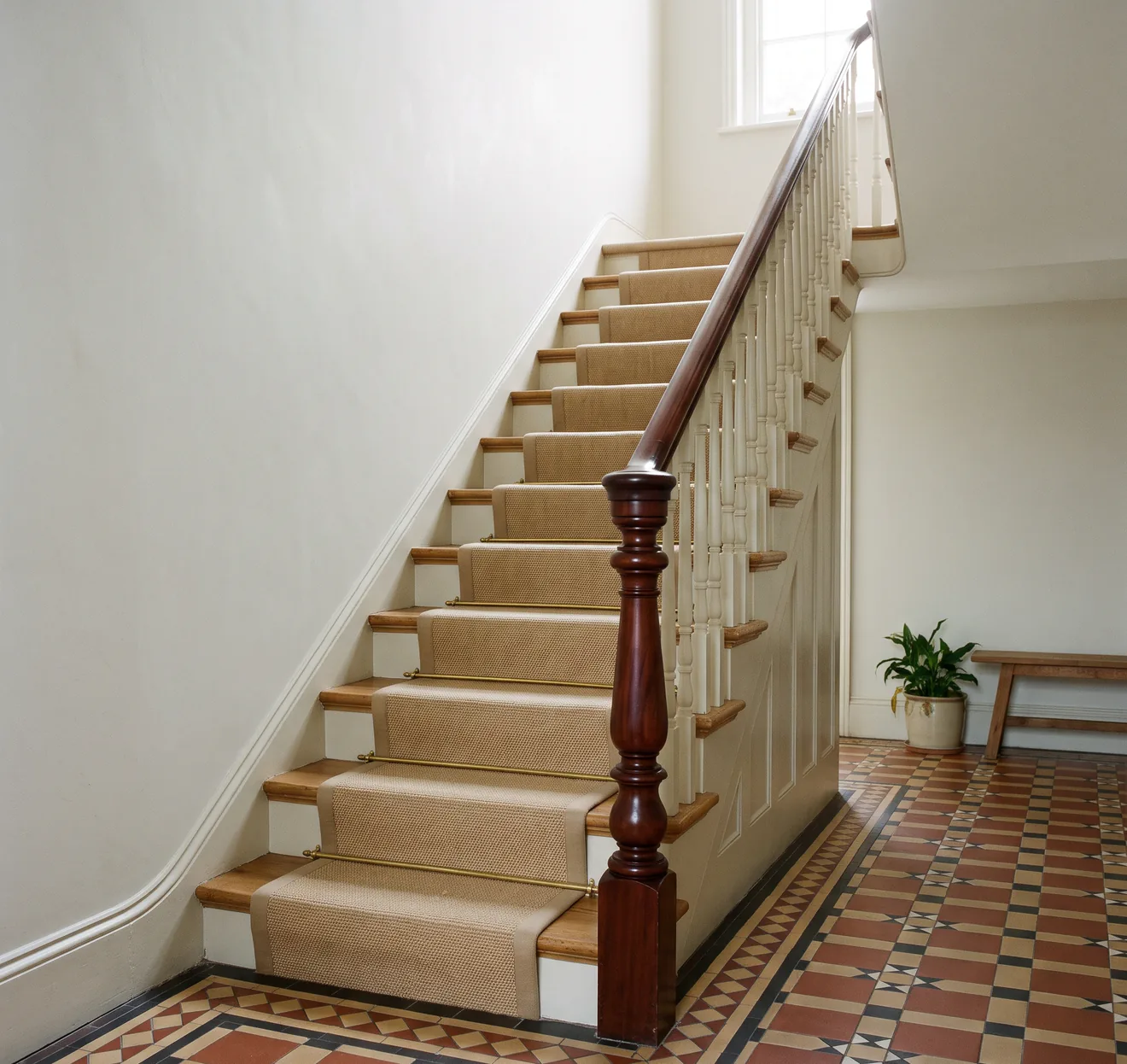
| A hand on the wall going upstairs | Since we moved in | “Every stair creaks and the newel post wobbles.” |
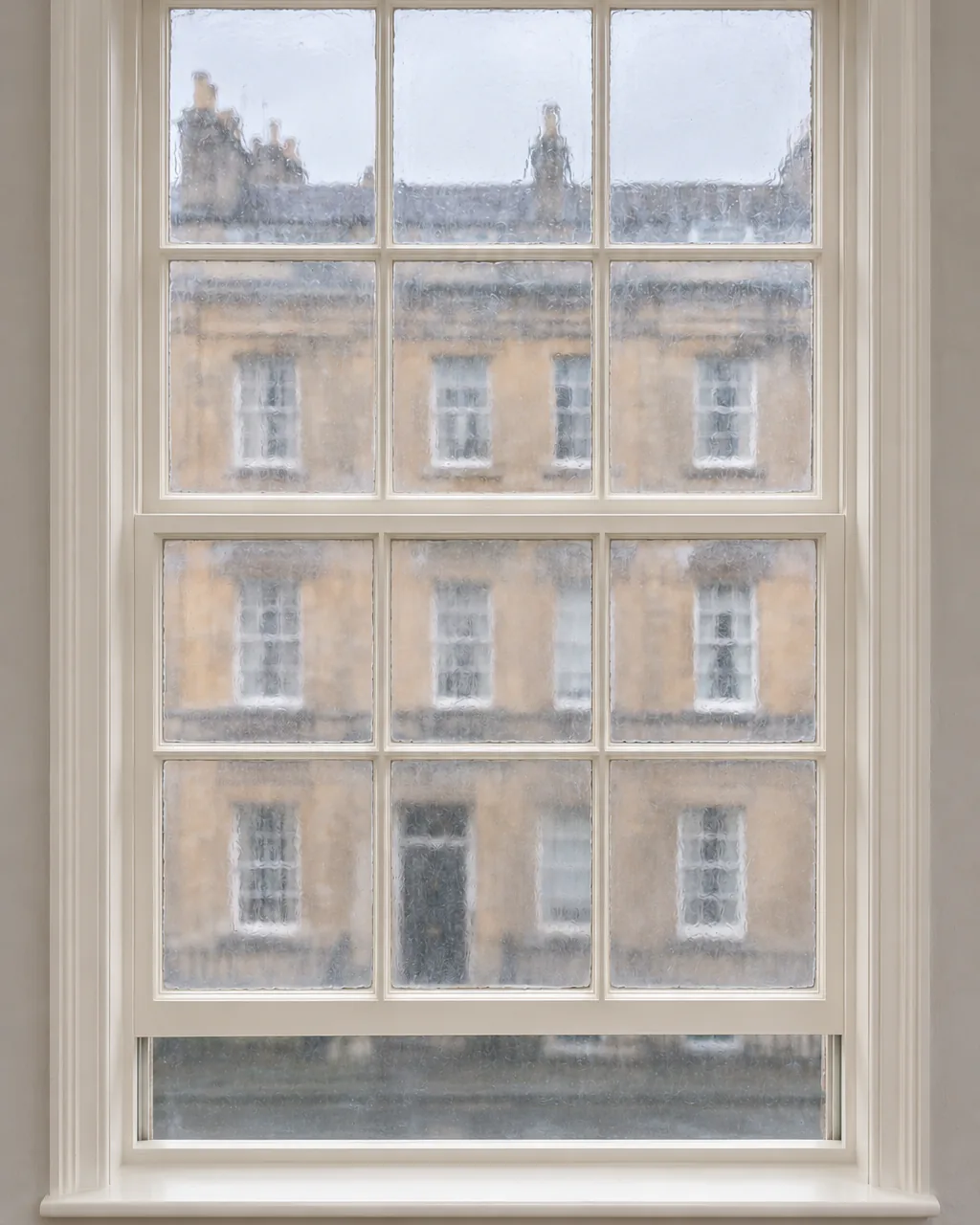
After[02]
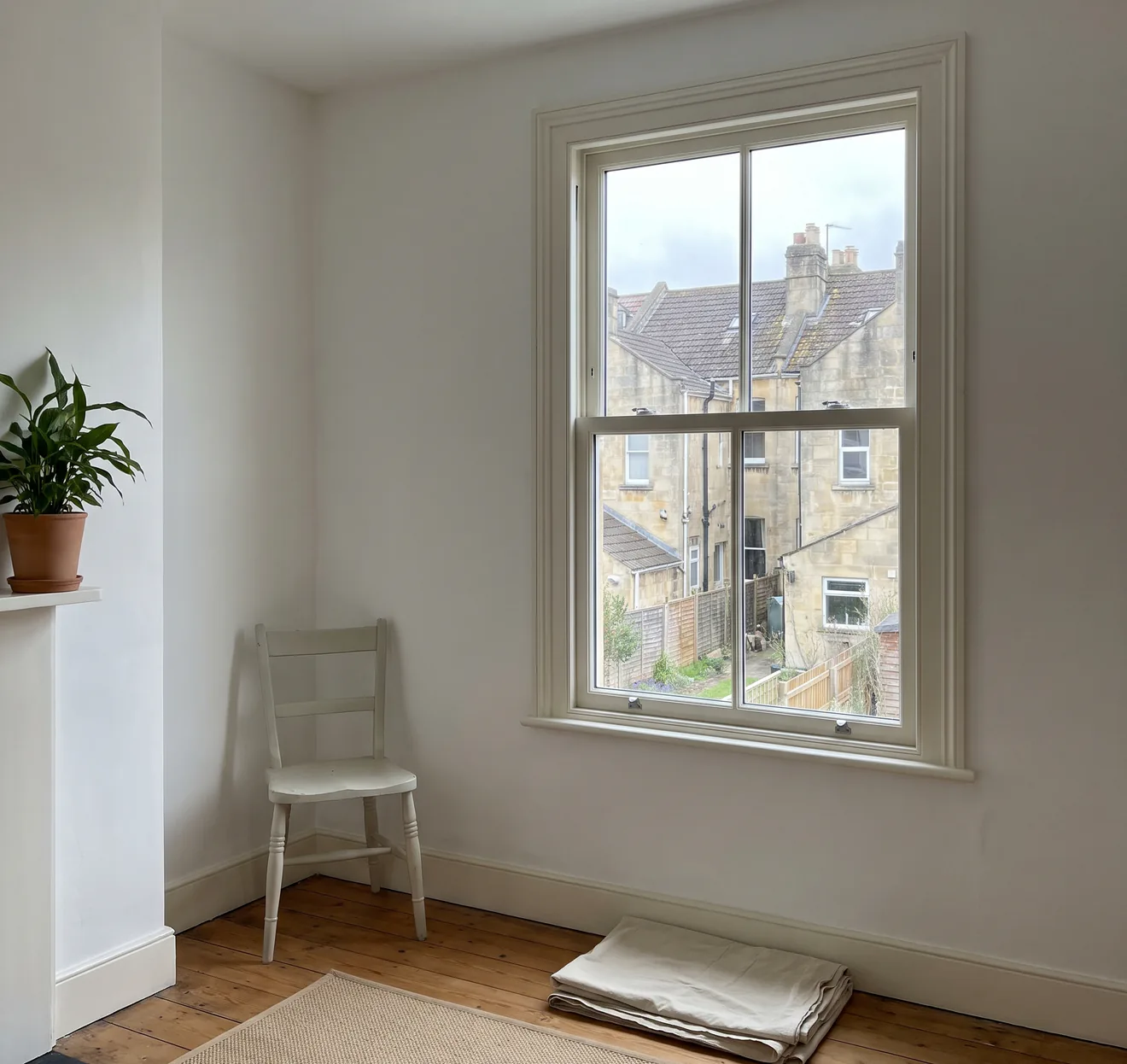
The same window, mended.
The same window from the same spot after an overhaul. Nothing props it, tapes it or stuffs it: the sash stays where it was left.
-
“Painted shut, rattling”
Eased, beaded and sealed
Both sashes come out and the paint build-up is eased. New staff and parting beads go in with brush seals routed into them, so the draught and the rattle stop and the sash still slides.
-
“Propped up with a book”
New cords, balanced weights
Waxed cotton cord is renewed on both sides at every overhaul, and the weights are re-balanced, so the sash stays where you leave it.
-
“Quoted to replace”
Mended, not replaced
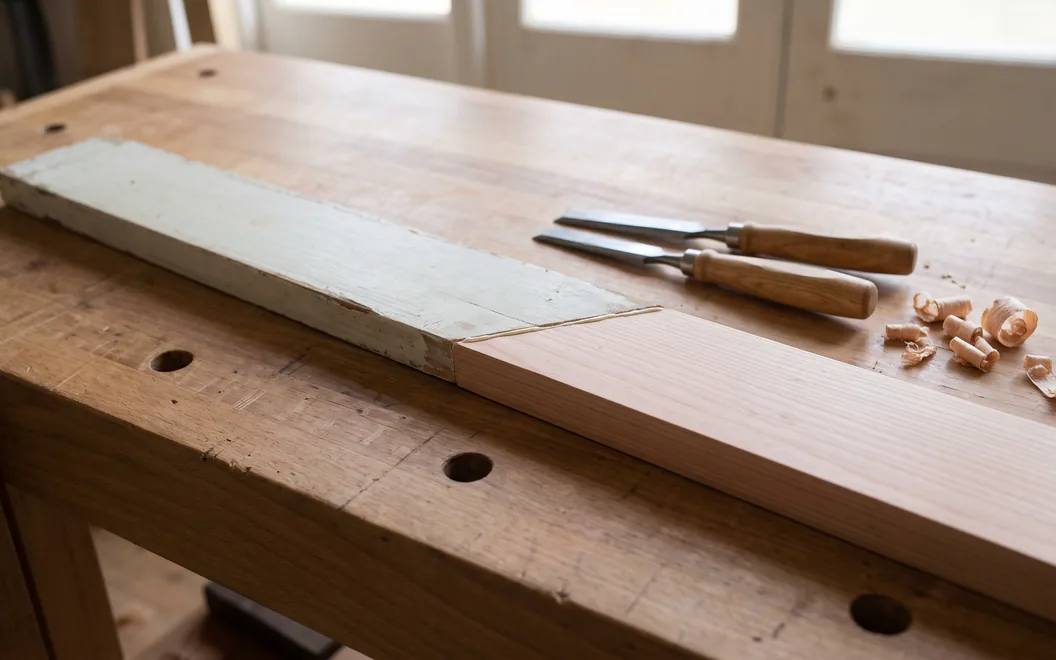
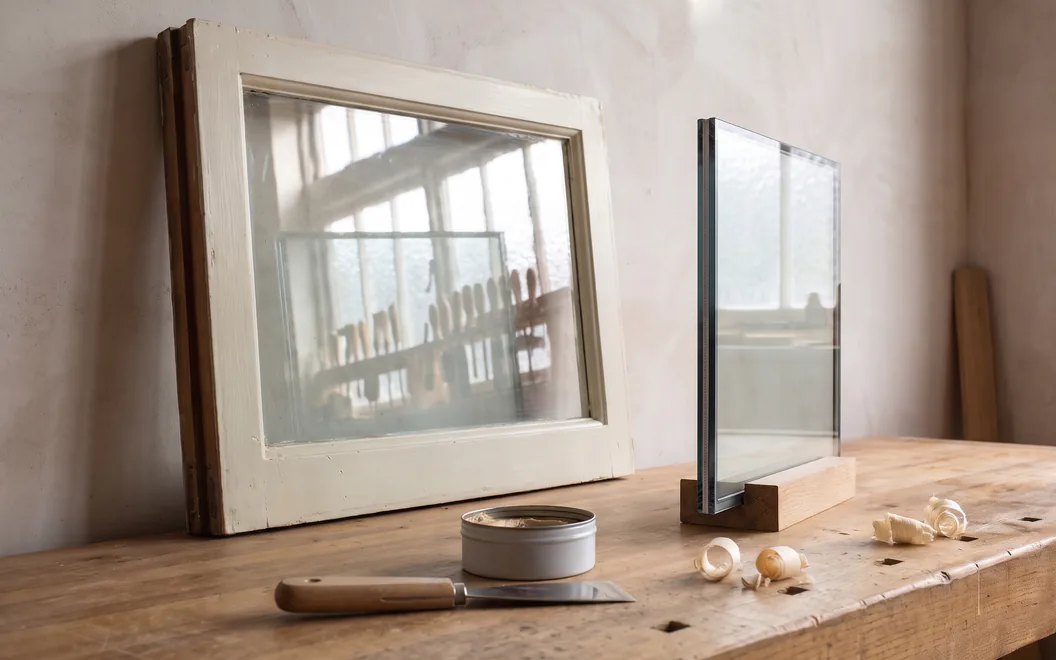
Soft timber is cut back and spliced in seasoned, slow-grown redwood, glued and pinned, so most of the old sash is kept. Whole old glass goes back in; a cracked pane is replaced in heritage cylinder glass that keeps the ripple.
-
“Am I allowed?”
Straight answers on consent
Like-for-like repair usually does not need listed building consent. Before any replacement we always say to check with the conservation officer at the council, and we help with the drawings and photos they ask for.
-
“Creaks and a wobbling newel”
A firm, quiet stair
Treads and risers are wedged and glue-blocked from below to stop the creaks, and a loose newel is re-fixed through the string.
Five-year written guarantee on the workmanship.
Prices[03]
What it costs, and the worry it ends.
Sample prices, including VAT at 20%. Scaffolding or a tower for upper floors is quoted separately and written on the quote.
Sash windows
-
Overhaul a box sash
Both sashes out, eased, new cords, re-balanced, new staff and parting beads, brush seals, decorated inside
Ends “Propped up with a book”
from £495 a window, sample
-
Draught-proofing
On a sound sash: brush seals routed into the beads
Ends “Rattling all winter”
from £260 a window, sample
-
Spliced timber repair
Seasoned redwood, glued and pinned; a sill splice from £240
Ends “Quoted to replace”
from £85 a splice, sample
-
Heritage cylinder glass
A cracked pane replaced in glass that keeps the ripple
Ends “Tape over the crack”
from £95 a pane, sample
-
Slim double glazing
Fitted into the existing sashes where allowed, with the weights re-balanced
Ends “Am I allowed?”
from £1,350 a window, sample
Staircases
-
Quietening a creaking stair
From below, with wedges and glue blocks
Ends “Every stair creaks”
from £450 a staircase, sample
-
Newel post re-fixed
Re-fixed and made firm
Ends “The newel wobbles”
from £320 a newel, sample
-
A baluster turned to match
Plus £180 to set up a new profile
from £120 each, sample
-
Handrail scarf repair
A damaged length cut out and scarfed in
from £280 a repair, sample
Also priced, sample Resin repair for a small soft spot, from £45 a spot. A new bottom sash made to match, from £850. A tread nosing spliced, from £140.
Book a survey→
One window at a time
3,140 sash windows restored since 2009
In Bath and the towns and villages within about 15 miles.
Example photo
Stages[04]
Six stages for a window, five for a stair.
You ring or send the form and we answer within one working day. The survey comes first, with the written report and a fixed price within 5 working days; nothing starts until you say yes. Then these are the stages, and who does each.
Sash windows
Example times for one window
01 Survey and report Every sash opened Condition report, photos, fixed price Half a day Surveying joiner
We open and test every sash, probe the sills and bottom rails for soft timber and photograph the lot. The written report and a fixed price per window follow within five working days. The survey is £180, a sample price, taken off the bill if you go ahead.
02 Easing and repair Rot cut back, sound wood kept Timber splices, resin for small spots 1 to 2 days Two joiners
Both sashes come out. Deep rot is cut back and spliced with seasoned redwood, glued and pinned; resin only fills small soft spots in timber that is otherwise sound. Paint build-up is eased off so the sash slides.
03 Cords, weights, beads Rehung to stay put Waxed cords, new staff and parting beads Half a day Two joiners
New waxed cotton cord on both sides, the weights checked and re-balanced, and fresh staff and parting beads cut to the old profile so each sash stays exactly where you leave it.
04 Reglazing Old glass kept where whole Heritage glass or slim glazing, linseed putty 1 day Joiner
Whole old panes go back in. Cracked ones are replaced in cylinder glass that keeps the ripple. Slim double glazing goes in only where consent allows and the sash is deep enough, with the weights made heavier to match.
05 Draught-proofing Quiet and snug Brush seals routed into the beads Half a day Joiner
Brush pile seals are routed into the staff and parting beads and along the meeting rails, so the draught and the rattle stop while the sash still slides freely.
06 Decoration Primed and two coats Linseed or microporous paint, glass cleaned 2 to 3 days Our painter
Bare timber is primed and the window painted inside in two coats, with the paint kept off the cords and beads so nothing sticks again.
Staircases
Example times for one stair
01 Survey from below Every tread tested Report on each creak and loose part Half a day Owen, stair lead
We walk every tread, mark each creak, and look at the underside where we can reach it, or lift a board or a panel to see it.
02 Tighten and quieten Wedges and glue blocks New wedges, glue blocks under each tread 1 to 2 days Two joiners
Loose wedges are knocked out and recut, and glue blocks fixed into the corner between tread and riser from below, to stop the creaks.
03 Balusters Turned to match Splices, or new ones off our lathe 3 to 5 days Owen at the lathe
Split balusters are spliced; missing ones are turned in the workshop from a profile taken off a sound neighbour, then fitted into the old mortices.
04 Handrail and newel Firm to the hand Scarf joints, the newel re-fixed 1 to 2 days Two joiners
Damaged lengths of rail are cut out and scarfed in to the same section; a loose newel is drawn tight and fixed back through the string.
05 Treads and finish Nosings made good Spliced nosings, stain or paint to match 2 to 3 days Joiner and painter
Worn nosings get a splice of matching timber, then the new wood is coloured and finished to sit beside the old.
-
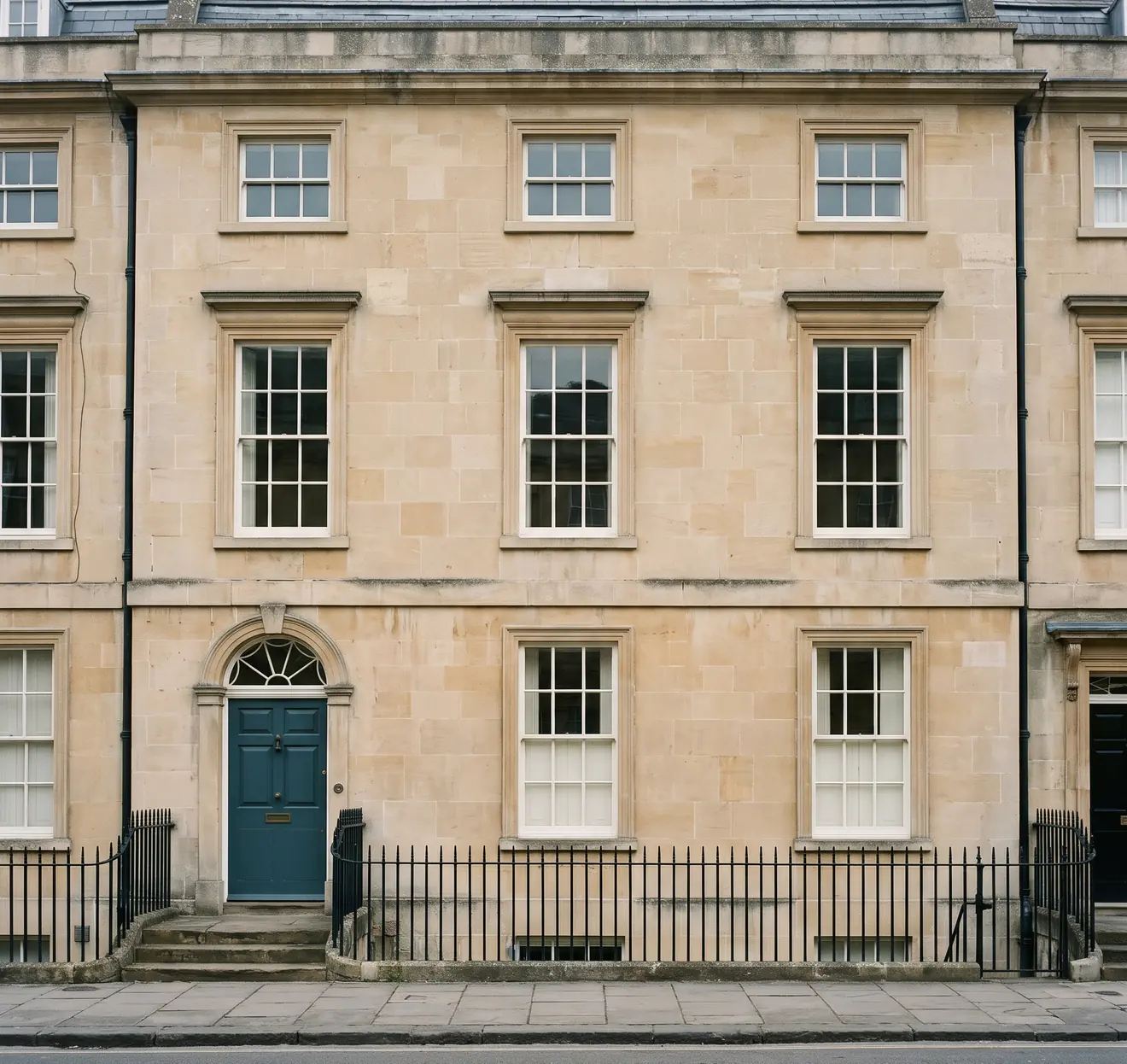
Bathwick townhouse
- Built
- About 1795, Grade II
- Took
- 6 weeks, 2026
- Found
- Sashes painted shut or rattling, soft timber in 22 stile and sill ends, nine cracked panes and snapped top-floor cords.
- Done
- 14 box sashes overhauled, 22 spliced repairs, brush seals throughout, 9 cracked panes replaced with heritage glass. No consent needed, as the conservation officer confirmed.
-
Widcombe villa
- Built
- 1860s, unlisted
- Took
- Two weeks, 2025
- Found
- A stair that creaked on every tread, six balusters missing or split, a loose newel and a cracked handrail.
- Done
- Six balusters turned to match on the lathe, a scarf joint in the handrail, the newel re-fixed through the string, the treads wedged and glue-blocked from below.
-
Larkhall terrace
- Built
- 1890s, conservation area
- Took
- Three weeks, 2025
- Found
- Six sashes that would not stay up, cold back rooms, and weights too light for any new glass.
- Done
- All six overhauled; slim double glazing in the three rear sashes on heavier weights; the street front kept in single glass.
The workshop[06]
Mended, not replaced, since 2009.
Four joiners, one apprentice and one painter, all employed, never subcontracted, working from a bench off the Lower Bristol Road. Martha Leckie, a time-served joiner since 2001, started Newel & Sash in 2009 and still surveys most windows herself; Owen Tarrant runs the stair work and the lathe.
- Houses worked on since 2009
- 920
- Staircases restored since 2009
- 186
- Listed houses among them
- 410
- Splices last year
- 1,260
We lift each sash out of its box, cut away only the timber that has gone soft, splice in seasoned redwood, and hang it back on new cords so it slides freely and stays where you leave it.
- Box sashes
- Parting beads
- Staff beads
- Spliced repairs
- Heritage glass
- Brush seals
- Balusters
- Newel posts
- Handrails
- Treads and nosings
Owners[07]
What owners noticed the first winter.
Notes from owners after the first cold spell, each with the worry they came in with. Shown as examples.
-
Example review
- Came in with
- Sashes painted shut for twenty years
- Went home with
- Fourteen sashes eased, re-corded and sealed
“The sashes we had painted shut for twenty years now go up with two fingers, and the bedroom no longer whistles in a south-westerly.”
Anna Whitlock Owner
-
Example review
- Came in with
- A stair that creaked on every tread
- Went home with
- Six balusters turned to match, the creaks quietened
“You cannot tell which balusters are new. Owen took a profile off the old ones and the six he turned sit in the run like they were always there.”
Raj and Helen Mistry Owners
-
Example review
- Came in with
- Is double glazing even allowed here?
- Went home with
- Slim glazing at the back, single glass on the street
“They told us straight that the front should stay single glazed and why. The back rooms are warm now and the street side still looks right.”
Tom Ferris Owner
-
Example review
- Came in with
- Three firms said replace
- Went home with
- Two sills spliced, every frame kept
“Three other firms said replace. Martha cut out two rotten sills, spliced in new ends and saved every frame in the cottage.”
Judith Okafor Owner
-
Example review
- Came in with
- A rattle that kept us awake
- Went home with
- A fixed price per window, and quiet nights
“A written report with a price per window, and the bill came in at exactly that. The rattling at night simply stopped.”
Peter Grange Owner
Questions[08]
Plain answers before you ring.
What owners ask first, answered by the joiners who do the work.
Not answered here?
Ask us: every enquiry is answered within one working day, and the survey report with its fixed prices follows within 5 working days.
Book a survey →Do I need consent to mend a listed sash?
Like-for-like repair usually does not need listed building consent. Replacing windows or staircase parts, and usually fitting double glazing, does. We always say to check with the conservation officer at the council before any replacement, and we help with the drawings and photos they ask for. The council decides, not us.
Can I have double glazing in an old sash?
Slim double-glazed units, about 12 to 14 mm, go in only where consent allows and the sash is deep enough, and the weights are re-balanced for the heavier glass. Otherwise cracked panes are replaced in heritage cylinder glass and brush seals stop the draught.
I am not listed but in a conservation area. Does that matter?
It can: an Article 4 direction can mean changing the windows of an unlisted house needs planning permission. Repair like for like does not.
What about old lead paint?
Paint from before the 1960s often holds lead. We wet-abrade or strip it chemically, never dry sand or burn it, with the room sheeted and a HEPA vacuum running.
What if a sash has to go to the workshop?
Sashes that need bench work come back to our workshop off the Lower Bristol Road, and the opening is boarded and sealed overnight.
Do I pay a deposit?
None on windows. On staircases with turned parts, the timber is paid for when it is ordered and the rest when the job is signed off.
Is VAT included in the prices?
Yes, at 20%: an overhaul from £495 a window (a sample price) already includes it. Repairs and maintenance, on listed buildings too, are standard-rated; the zero rate for approved alterations to listed buildings ended in 2012.
Do you fit new windows?
No. We repair what the house already has: no new-build windows, kitchens or fitted furniture. Repairing a sash is not controlled work under the building regulations; replacing a whole window is.
Three longer answers
-
Do I need consent to mend a listed sash?
Repair like for like usually needs no listed building consent; replacement and most double glazing do. Check with the conservation officer before any part is swapped.
-
Slim double glazing or heritage glass?
Slim units need a deep enough sash, heavier weights and, on a listed house, consent. Cylinder glass keeps the ripple; brush seals stop the draughts either way.
-
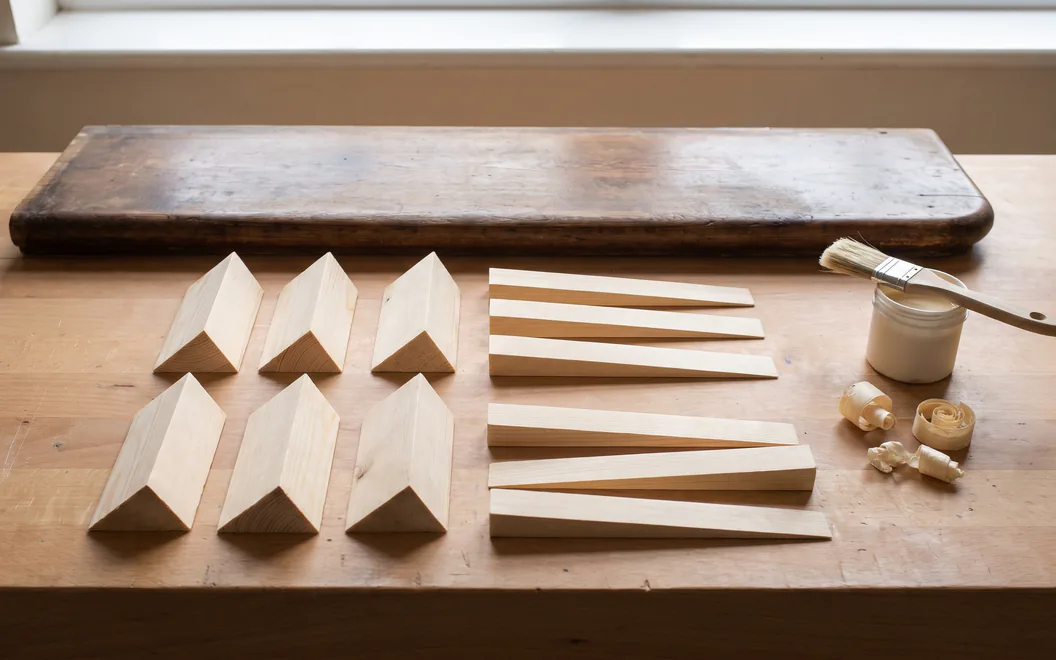
Why stairs creak, and how we quieten them
We wedge and glue-block treads and risers from below to stop creaks.